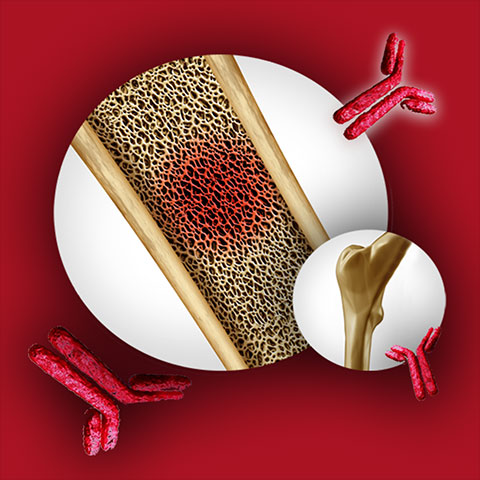


Dive into immersive, case-based learning on evolving treatment strategies in multiple myeloma.
This augmented reality experience is designed for hematology/oncology clinicians and provides highly interactive exploration of real-world decision-making in relapsed/refractory multiple myeloma (RRMM). Through two detailed patient cases, learners examine treatment sequencing, bispecific antibody (BsAb) integration, and toxicity management in accordance with clinical practice guidelines. Simply launch the app and point your device at a flat surface to begin. The AR experience places engaging, expert-informed content directly into the learner’s environment, supporting dynamic and personalized knowledge retention.
What You’ll Learn
Evidence-based strategies for incorporating bispecific antibodies across multiple lines of therapy Clinical decision pathways for patients with standard-risk, high-risk, and frail disease profiles Key efficacy data for approved BCMA-directed therapies Safety considerations including cytokine release syndrome (CRS) recognition and management Insights into emerging bispecific antibody combinations and earlier-line clinical trials
Highlights
Two interactive patient cases simulating real-world RRMM presentations Step-by-step treatment journeys, from frontline therapy through triple class-exposed and penta-refractory relapse Animations highlighting mechanism-of-action visuals and immune-cell engagement Response assessments and toxicity monitoring Guideline-driven decision prompts with immediate feedback and rationale
Designed for Oncology Professionals
Ideal for hematologists/oncologists, advanced practice providers, and nurses seeking innovative, immersive CME learning experiences focused on MM treatment advances.
Part of the ENCOMPASS Initiative
This app complements a full suite of digital education tools including VR modules, downloadable animations, and practice-support resources designed to improve patient-centered care and clinical outcomes. Download now to explore the future of multiple myeloma care through cutting-edge augmented reality-based education.
In nonmelanoma skin cancer (NMSC), particularly cutaneous squamous cell carcinoma (cSCC), treatment selection has evolved with the integration of immune checkpoint inhibitors (ICIs) across multiple stages of disease. Current guidelines support a risk-adapted approach in which ICIs play a central role for patients with high-risk, locally advanced, or metastatic disease, as well as an emerging role in earlier treatment settings.
For unresectable or metastatic disease, ICIs targeting the PD-1/PD-L1 pathway are the preferred systemic therapy, offering durable responses and a favorable tolerability profile compared with traditional approaches. Their use is supported by the underlying tumor biology of cSCC, which is characterized by a high tumor mutational burden driven by ultraviolet radiation exposure. This leads to increased neoantigen formation and enhanced tumor immunogenicity, making these tumors particularly responsive to immune modulation. In addition, upregulation of immune checkpoint pathways such as PD-1/PD-L1 contributes to immune evasion, providing a strong mechanistic rationale for checkpoint blockade.
Beyond advanced disease, ICIs are increasingly being incorporated into neoadjuvant and adjuvant treatment strategies for high-risk, resectable NMSC. In the neoadjuvant setting, ICIs may reduce tumor burden, improve surgical outcomes, and, in some cases, enable less extensive resections. In the adjuvant setting, they are being explored to reduce the risk of recurrence following surgery, particularly in patients with high-risk pathologic features. These approaches reflect a shift toward earlier immune intervention in the disease course.